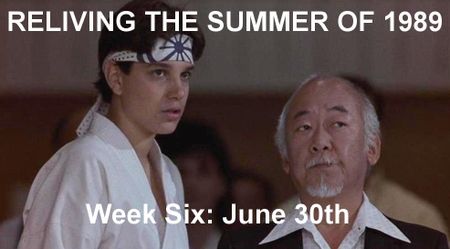
Inhaling the badness of “The Karate Kid: Part III,” stunned by the insanity of “Great Balls of Fire!,” and polishing the “Do the Right Thing” trophy.
June 30th, 1989
The Karate Kid: Part III
Nutshell: Refusing to defend his karate champ title, Daniel LaRusso (Ralph Macchio) is targeted by Terry Silver (Thomas Ian Griffith), a sadistic sensei who bullies the young man into competition. Turned away by pal/teacher Mr. Miyagi (Pat Morita) due to his desperation, Daniel is tricked into learning violent karate skills to defeat an arrogant, brutal new face (Sean Kanan) on the competitive circuit.
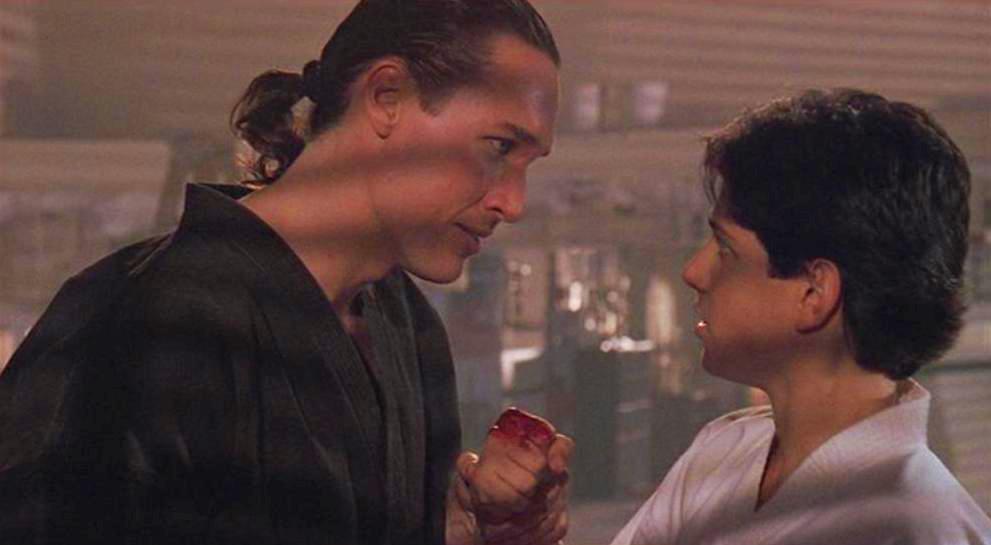
1989: 1984’s “Karate Kid” and 1986’s “Karate Kid: Part II” were the surprise releases of their respective summers, coming out of the blue armed with overwhelming audience approval and underdog screenplays that expertly reshaped cliché through potent emotional context. They were hugely popular movies and rightfully so: “Kid 1” being the sleeper sucker punch the eventful, perhaps predetermined summer of ‘84 needed to retain its shock value, and “Kid 2” was the inevitable sequel, yet still managed to overcome significant disapproval, due in great part to the film’s inventive change of locale (rural Japan) and the ungodly power of persuasion that emerged from the clipped pipes of singer Peter Cetera, who owned the airwaves with the omnipresent single/marketing hook, “Glory of Love.” By this time, I was engorged with “Karate Kid” adoration, with both pictures nestled deep into my Miyagi-lovin’ heart.
“Karate Kid: Part III” arrived adorned with a tsunami of self-awareness, assuming the forms of toys, cartoons, and aggressive marketing to assist Sony and their plans to extract as much cash as they possibly could from “Kid” fanatics. The corporate insistence on franchising “Kid” beyond all realms of probability is a memory I can still distinctly dial up. The initial pictures were such sweet, gentle, stand-up-and-cheer sleepers, yet “Kid 3” hustled into theaters pungent with the stink of desperation. With star Macchio nearing 30 years of age, the jokes were easy to make. The screenwriters didn’t help matters by serving up a disturbingly flaccid story of LaRusso adversity, though efforts to butch up the tale, dealing with Daniel’s maturity and romantic patience, did not go unnoticed. I slipped into “Kid 3” on a summer afternoon with some enthusiasm, but it was clear the cornball purity was officially rubbed away. The sequel imploded through ridiculous performances, laborious formula, and the vague disinterest of the filmmakers. This was a crushing disappointment of a movie, though I willed myself into chatting it up positively for years, perhaps out of desperation to keep the brand name viable as a personal declaration of love.
2009: It’s difficult to believe that nearly every member of the primary artistic team from the first two features returned for the third “Kid” installment, and this was the cruel abomination that resulted. Lightning did not strike a third time. Watching this film again was like taking a harrowing trip into the Bermuda Triangle — it’s a “Karate Kid” movie, with familiar faces, victorious scoring cues, and obvious moral certainty, but the whole effort is caught in a powerful vortex of absurdity. Up is down, men are kids, and the warm liquid center of slap-happy sentimentality has been knocked unconscious while the production participants hastily reassemble to generate sizable paydays.
Oh, it’s an appalling motion picture.
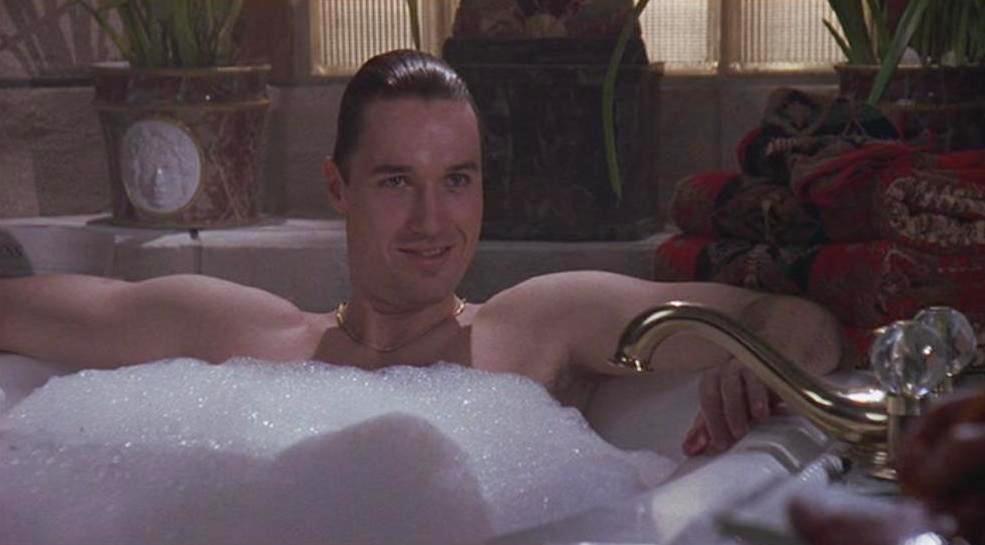
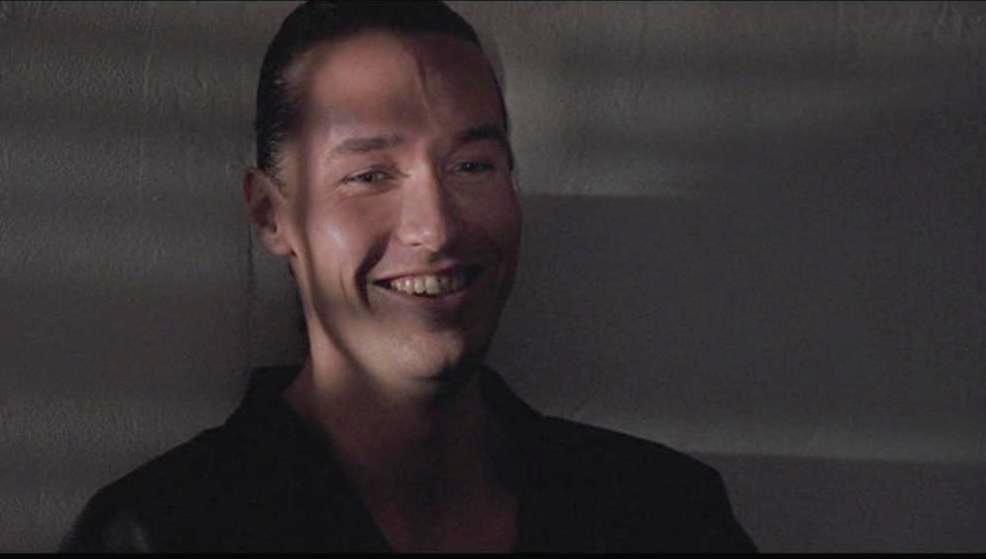
I have many beefs over how “Kid 3” was handled, but nothing stirs up the Orndorphins (thanks to artist Steven Lang for that one) quite like Griffith’s Terry Silver character. While a series marked by outlandish, vein-popping villains meant to express rowdy cartoon menace while petite LaRusso cowers until the final showdown, Silver is the unlikely franchise anomaly. A greasy ponytailed industrialist with a penchant for hearty cackles, cutthroat business behavior, and a firm dedication to his Vietnam soldier brotherhood, Silver is Satan incarnate, with Griffith pitching his performance past the rafters and into flat-out orbit. It’s ham on steroids, and every Godzilla-sized step forward Griffith takes with this illogically broad performance feels like a shiv to the lower intestines. It’s difficult to watch the ardent actor eat the frame, turning what might’ve been just a modest “Kid” misfire into a flaming runaway boulder of shame. This was Griffith’s screen debut, and I’m honestly stunned he found more work after this. While an interestingly hulking frame counterweight to Macchio’s profitable puffball stature (though this karate “kid” was actually five months older than his howling screen adversary), Griffith is a walking nightmare throughout the film, but not in the epic manner director John G. Avildsen was perhaps intending. Every time Silver shows up, you don’t just want to stop the movie; you want to pull out the DVD, place it in a box, fill the box with concrete, and dump the block into the nearest river. It’s the only way to be sure Griffith’s acting never surfaces again.

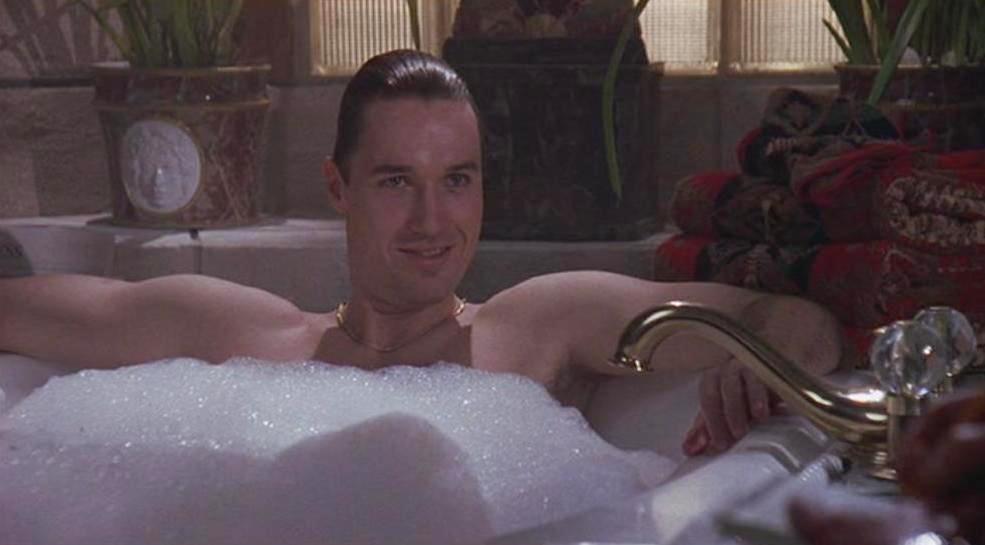
And just to make sure everyone and their mother understand that Terry Silver was supposed to be an evil presence, the screenplay has the character humiliating LaRusso in front of his girl (a peppy Robin Lively), dictating insulting missives while spread out in a bubble bath and choking down a cigar, holding back giggles while he instigates his master plan of retribution, and, get ready for this, illegally dumps nuclear waste in his spare time. Allegedly deleted from the film: scenes of Terry burning a copy of the Qur’an while nibbling on candy literally stolen from a baby, calling Pixar “overrated,” and playin
g bass in a Nickelback tribute band.

That slimy sonofabitch.
Still, Pat Morita is gold in the picture. I could never be upset with his peaceful, interior take on Miyagi. Besides, he’s quite honestly the only actor in the film to actively infuse a modicum of silence in his work. The man deserved a medal for his restraint.
Great Balls of Fire!
Nutshell: The early life and times of singer Jerry Lee Lewis (Dennis Quaid), who shook the music industry, married his 13-year-old cousin (Winona Ryder), and self-destructed, ensuring him semi-legendary status for the rest of his days.
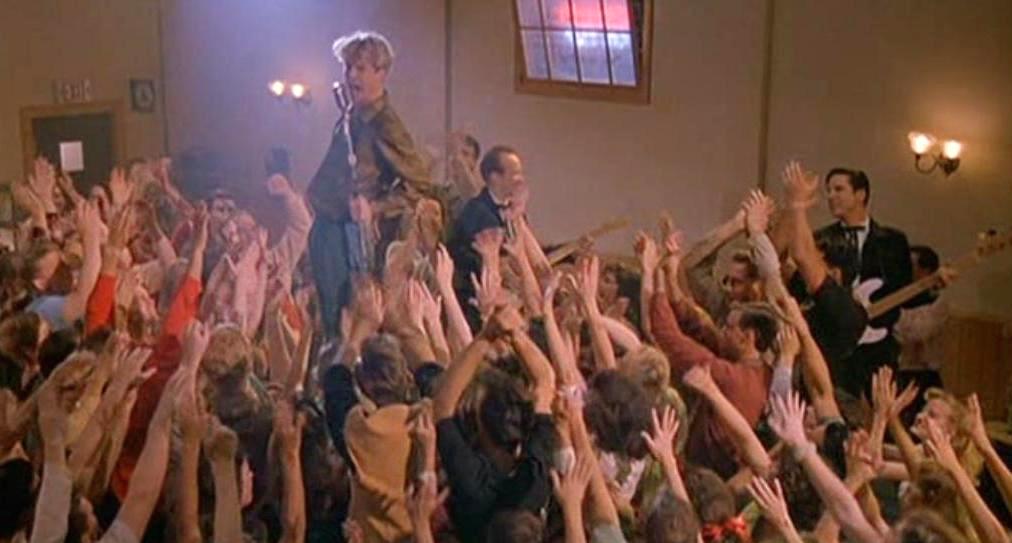
1989: Jerry Lee Lewis was a wild man. He was The Killer. He also was a gigantic question mark to a young Brian, as I only knew a few of the popular songs attributed to his meteoric rise to fame in the 1950s. “Great Balls of Fire” was a bio-pic that didn’t promise a healthy look at the life of a crumpled artist, it merely hoped to convey the sexual steam emerging from the man at his mightiest, and how that bravado and generous portion of southern dingbattery quickly crushed his fame. While the feature was emphatically sold as a Dennis-Quaid-Oscar-baiting circus sideshow, the picture also starred Winona Ryder. In the summer of 1989, there was nothing that could urge me into the theater faster than hearing the name Winona Ryder associated with a movie.

I was fostering a bit of a crush at the time, and Ryder already scored big in May of ’89 with “Heathers,” the cult classic that invited a series of puzzled looks and minor condemnation at the time of its release, but now commands a round of applause when brought up in casual conversation. “Heathers” was a brilliantly sinister movie back then, and really opened my eyes to Ryder as both an actress and pre-teen figure of innocent (*wink*) obsession. While “Fire” should’ve been an unremarkable, easily avoided cinematic essay on a forgotten musical artist, it became must-see cinema once Ryder got involved. A shallow response? Yes. But the cornpone wit and breakneck musicianship of Jerry Lee Lewis wasn’t exactly catnip to a young boy.
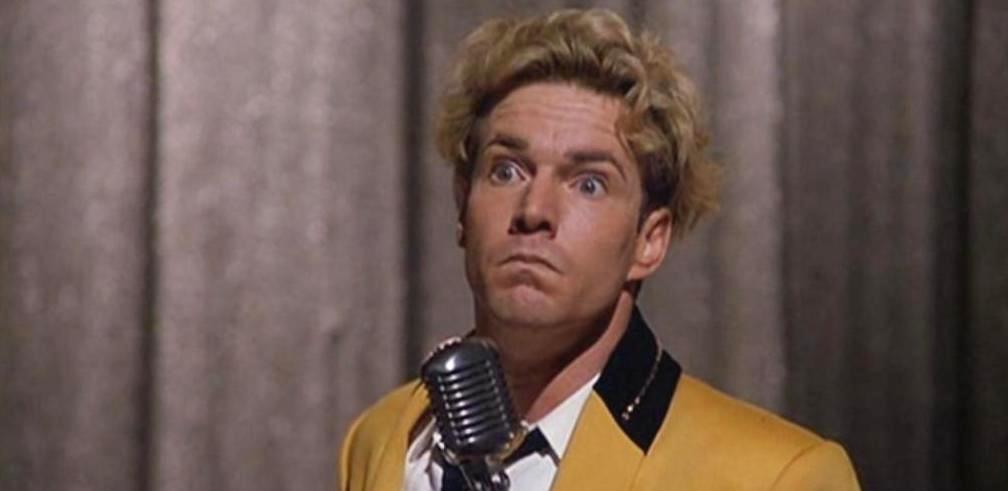


Quaid enjoyed a lot of attention for his unbridled performance as Lewis, and I recall feeling a certain amazement with his impressive channeling of lustful sway and stage brutality. Being an introduction in many ways to the influential Sun Records era, “Fire” was a festival of colors and sounds, often rolled into an anesthetizing sensory ball that Quaid batted around effectively. The underlying cruelty of Lewis, or perhaps his stupidity, didn’t register at the time as all that severe. I was more in tune with the blitzkrieg performances and Quaid’s tireless interest in retaining Lewis’s concrete pride — his ultimate downfall. I consumed the film as it came, with little attention to detail beyond the superficial. Oh, and after watching Ryder fully assumer her senior year splendor in “Heathers,” the regression to purposeful infantile behavior in “Fire” left me a little cold.
2009: Does anyone remember how insane “Fire” really was? I swear to God, I hold no memory of the film’s jittery, Looney Tunes-inspired filmmaking, yet revisiting the film left me utterly floored. Perhaps it’s the diet of glum music bio-pics like “Ray” and “Walk the Line” that exposed a weak spot to the explosion captured here, but I popped in “Fire” with some expectation of hysteria due to Quaid’s stomping, acrobatic performance. Turns out the entire film is absolutely batshit crazy.

Director Jim McBride (what happened to this g
uy?) angles to project the destructive whirlwind of Lewis’s life through sheer pitch of performance and the occasional flight of film-homage fancy. “Fire” doesn’t represent the reality of Lewis’s early years, but a sweetened projection of fantastical frenzy that informed his volcanic piano playing and initial racial-teetering burst of fame. McBride fearlessly crafts a cartoon, and it takes a good 20-30 minutes for the gaiety to catch on. Eventually, “Fire” makes it abundantly clear it’s not a nicely parted, tightly suited retelling of facts, but a brazen idolmaker, pushing Lewis, warts and all, to a semi-coherent state of filthy knighthood. McBride launches blazing visual torches at the screen hoping something will catch fire, and a few scenes that leap the furthest into slapstick surrealism (often punctuated by an Uzi-like Quaid, doing his best Foghorn Leghorn impression) register strongly as amusingly impulsive and inventive. The rest of the movie tends to burn itself out, leaving the final 25 minutes (the inevitable bio-pic plunge into the career toilet) a drawn-out drag.
I give McBride a participant ribbon for at least trying to sync Lewis’s natural born hellfire to a suitable big screen tempo. More than I ever could’ve imagined (or remembered), “Great Balls of Fire” is a fascinating, often terribly compelling failure. Much like Lewis’s life, I suppose.
Do the Right Thing
Nutshell: A day in the life of a troubled Bedford-Stuyvesant community, where patience slowly erodes over the course of a blistering summer day, leading to unimaginable violence and racial discord.

1989: So here’s a hot potato film, dealing with racial divide in a frank R-rated manner, released out into a world where the media promised rioting would greet its launch. Yikes. Sitting down with “Do the Right Thing” at a local theater (the dearly departed Ridge Square triplex in Minnetonka, MN) was an alarming proposition, again involving my age and delicate suburban/puss constitution. This was my first theatrical Spike Lee film, and considering the hailstorm of controversy that greeted the picture’s tentative release, I recall an air of uneasiness, even within the walls of the safest theater around. “Do the Right Thing” was above my intellectual pay grade, perhaps leaving me the most ideal of filmgoer: young, dumb, and a sponge to anything Spike Lee dared to project.
From the opening title sequence, where a spastic Rosie Perez throbs to the propulsive sounds of Public Enemy, “Do the Right Thing” positions itself as a silver screen thunderbolt. Even the deaf, dumb, and blind could appreciate Lee’s natural finesse and imagination as a provocative filmmaker. Again, it’s difficult to fully articulate the power of the picture back in 1989, especially pressed upon a soft pubescent mind like my own. It was a blast of streetwise reality tarted up in funky NYC film school aesthetics, and I dug the sweatbox adrenaline rush, even if I didn’t quite latch on to the politics with the acidic gusto as encouraged by the filmmakers. I was a pipsqueak. My creaky sense of anti-establishment hostility would be suitably mangled and misdirected years later.
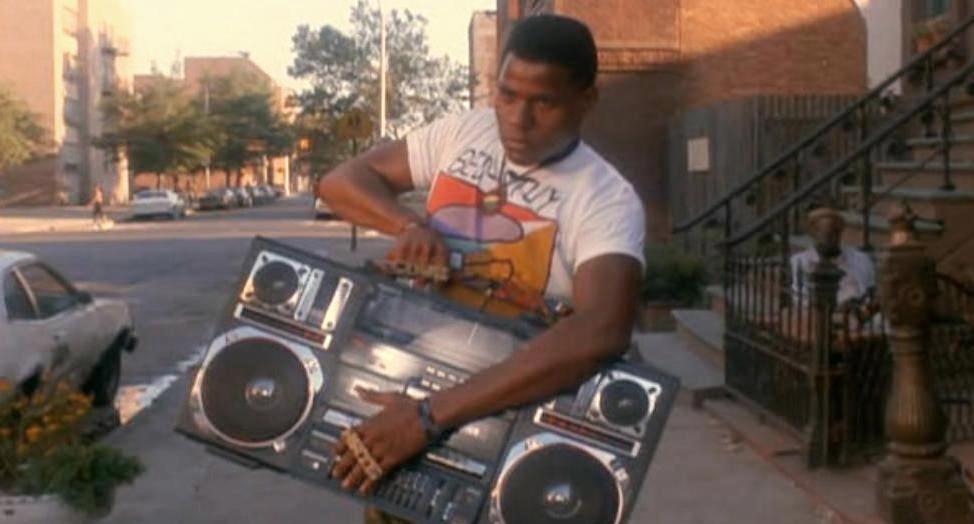
I walked (stumbled?) out of that theater breathless, confused, and in love with Spike Lee. It’s a pristine memory of appreciation I will always treasure.
2009: It’s the finest film Spike Lee has ever made. It’s the most gorgeous thing cinematographer Ernest Dickerson ever shot. It’s the most appropriate score ever provided by Bill Lee. It’s the best work actors Danny Aiello, Giancarlo Espositio, Spike Lee, Bill Nunn, and Rosie Perez have ever committed to the screen. Oh, the list could go on forever. It’s perhaps one of the greatest summer movies of all time. “Do the Right Thing” is as perfect as a film can get.

Today, we live during a time where Spike Lee has poisoned his own career, churning out dreck like “Miracle at St. Anna,” “She Hate Me,” and “Bamboozled.” It’s easy to forget Lee was once a leading American director with a dynamic eye for the black experience on film. “Do the Right Thing” is Lee’s only flawlessly modulated motion picture, capturing his voice in profound, hilarious, and horrifying ways that escaped his directorial toolbox long ago. Watching it again was like being resubmerged in genius, and what a thrill it was to recall a time when Spike Lee was full of visionary piss and vinegar. Where Lee didn’t have to mathematically calculate his dissent, he merely followed it through thrilling instinct. God, I adore the way this picture breathes, expressing itself through such powerful heat wave imagery and unexpectedly concise performances. It’s a cinematic language owned entirely by Lee, deployed throughout the film through pieces of sharply scripted characterization that creates an indelible depiction of a melting pot community coming apart at the seams. The viewer feels the incredible pressure build throughout the feature, throttled expertly to the poignant finale of violent discharge.
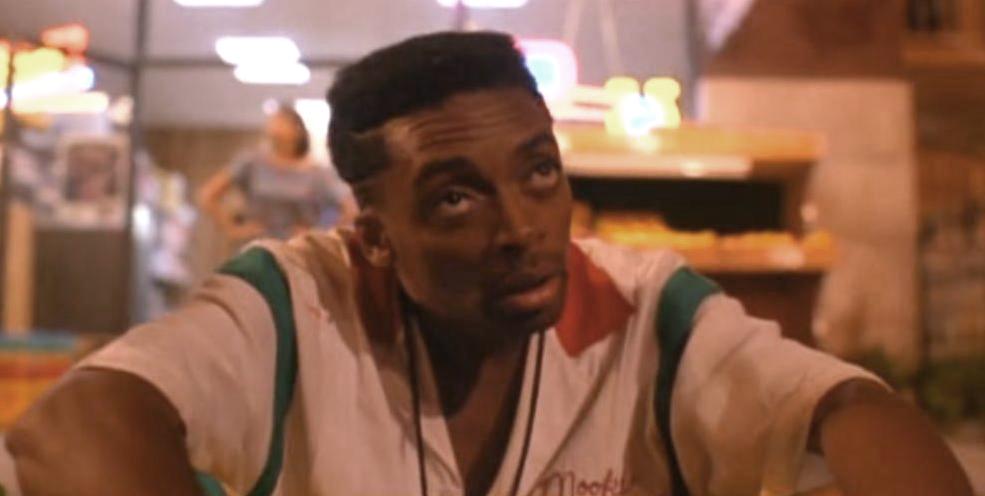
“Do the Right Thing” still holds considerable command as a statement of frustration, embittered rage, and desperate inhumanity. What Spike Lee conjured here was a pure, unfiltered artistic statement
he would never match again during in his scattershot career. Though in trying, he created some outstanding follow-up features. Spike Lee is not the man or filmmaker he used to be, but “Do the Right Thing” stands erect as his undying legacy, still emitting waves of hope that he’ll one day snap out of his thick fog of ego and craft something as raw, vital, and infuriating once again.

Coming next week…
Yeah, I’ll say it: one of the finest sequels ever made.
And the unlikeliest comedic sensation of 1989.




Leave a comment